
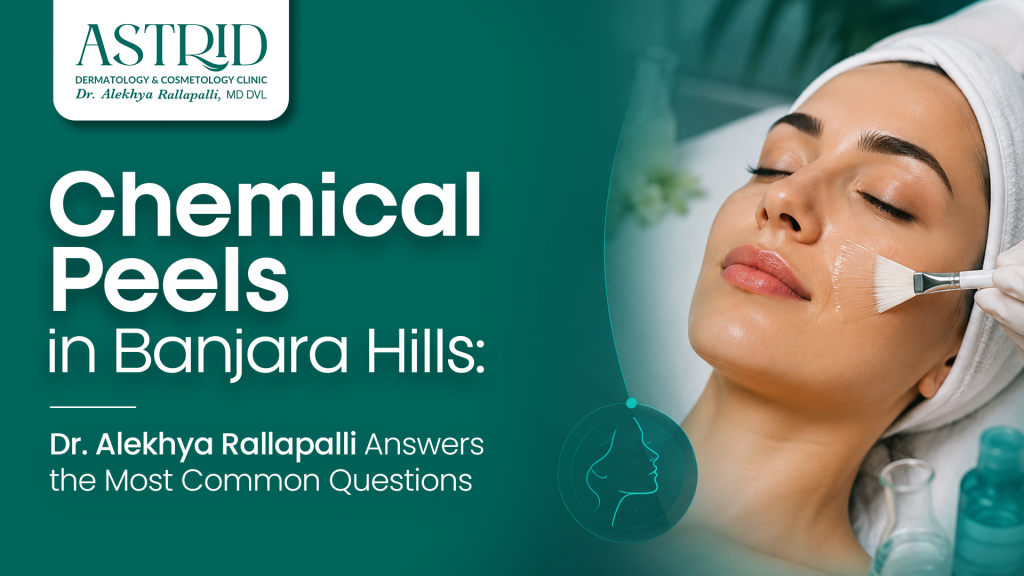
Clear, healthy-looking skin does not always come from expensive skincare products. Acne marks, pigmentation, sun damage, uneven skin tone, dullness, and rough texture can sometimes remain despite following a regular skincare routine. This is where professional treatments such as chemical peels may help.
For people exploring Chemical Peels in Banjara Hills, one of the biggest concerns is knowing whether the treatment is right for their skin. Questions about safety, discomfort, peeling, recovery time, results, and cost are completely normal.
At the same time, chemical peels are not a one-size-fits-all treatment. The type, strength, and frequency of a peel should be selected according to our skin type, concern, sensitivity, and treatment goals.
In this guide, Dr. Alekhya Rallapalli answers some of the most common questions patients ask about chemical peel treatment and explains what we should realistically expect before, during, and after the procedure.
Chemical Peels Explained: What Really Happens to Your Skin?
A chemical peel is a professional skin treatment that uses a carefully selected exfoliating solution to remove or loosen damaged surface skin cells. Depending on the type and depth of the peel, it can improve the appearance of concerns such as pigmentation, acne, uneven skin tone, dullness, and rough texture.
Unlike a regular facial, a chemical peel for skin is selected and performed according to a specific treatment goal. Different formulations and strengths are suitable for different concerns.
The aim is not simply to make the skin peel. Instead, the goal is controlled exfoliation that supports smoother, more even-looking skin.
Why Are Chemical Peels Popular in Banjara Hills?
Our skin is exposed to several everyday factors, including strong sunlight, pollution, heat, humidity, stress, and inconsistent skincare routines. For many Indian men and women, pigmentation and post-acne marks can also be persistent concerns.
A professionally planned chemical peel treatment in Banjara Hills may be considered for concerns such as:
- Acne and post-acne marks
- Uneven skin tone
- Certain types of pigmentation
- Dark spots
- Dull-looking skin
- Rough skin texture
- Mild sun-related skin changes
- Some superficial signs of ageing
However, the same peel is not appropriate for everyone. This is especially important for Indian skin, which can be more prone to pigmentation changes after irritation or inflammation.
Are Chemical Peels Safe for Indian Skin?
Yes, chemical peels can be used for Indian skin, but proper assessment and treatment selection are important.
Our skin can respond differently depending on its natural pigmentation, sensitivity, existing skin conditions, medications, recent treatments, and exposure to sunlight. An overly aggressive peel may increase the risk of irritation or unwanted pigmentation.
That is why choosing the strongest peel is not necessarily the best approach.
A professional consultation helps determine:
- Which peel may be appropriate
- How strong the treatment should be
- Whether skin preparation is required
- How frequently treatment should be performed
- What aftercare our skin needs
For anyone considering Chemical Peels in Banjara Hills, personalized treatment is more important than simply choosing a popular peel.
What Can a Chemical Peel Actually Improve?
A chemical peel can target several common skin concerns when the right treatment is chosen for our skin.
From acne marks to pigmentation, let’s explore what a peel may actually help improve.
Chemical Peel for Acne and Acne Marks
Certain chemical peels may help improve the appearance of acne-prone skin and superficial marks left after acne. The appropriate treatment depends on whether we are dealing with active acne, pigmentation, texture changes, or true acne scars.
It is important to understand that not every acne scar can be treated effectively with a peel alone. Deeper or depressed scars may require a different treatment approach.
Chemical Peel for Pigmentation and Dark Spots
Pigmentation can develop for many reasons, including sun exposure, inflammation, hormonal changes, and previous acne. Selected peels may help improve the appearance of some superficial pigmentation and dark spots.
However, pigmentation treatment usually requires more than one approach. Daily sun protection and an appropriate skincare routine remain important.
Chemical Peel for Uneven Skin Tone
If our skin looks patchy or uneven, controlled exfoliation may help create a more balanced appearance over time.
Chemical Peel for Dull or Rough Skin
Dead skin cell buildup can make the skin appear dull and rough. A suitable peel may help improve surface texture and give the skin a fresher appearance.
A Facial or a Chemical Peel? Understanding the Real Difference
Although both treatments are associated with improving the appearance of the skin, they are not the same.
| Feature | Chemical Peel | Regular Facial |
| Main purpose | Targeted exfoliation and skin concerns | Cleansing, hydration and refreshment |
| Treatment approach | Professionally selected chemical exfoliant | Cleansing, massage, masks and skincare products |
| Customization | Selected according to skin concern and skin type | Usually focused on general skin maintenance |
| Peeling | May occur depending on peel depth | Usually not expected |
| Recovery | May require aftercare and temporary downtime | Usually little to no downtime |
| Best suited for | Selected pigmentation, acne-related concerns, texture and dullness | General cleansing and hydration |
A facial chemical peel should therefore not be viewed as simply a stronger facial. It is a clinical skin treatment that requires appropriate assessment and aftercare.
What Happens When You Get a Chemical Peel?
Many patients feel nervous before their first treatment because they are unsure what the process involves.
Generally, the treatment begins with a skin assessment and cleansing. The selected peel solution is then carefully applied to the treatment area. Depending on the product and treatment plan, we may experience mild tingling, warmth, or temporary sensitivity.
The treatment itself is usually relatively quick, but the exact duration depends on the type of peel and the area being treated.
Our specialist will monitor the skin and provide instructions for what to do after the procedure.
How Long Does Your Skin Need to Recover After a Peel?
After a superficial treatment, some people may experience mild redness, dryness, tightness, or light flaking. Deeper treatments can involve more noticeable peeling and a longer recovery period.
One important point is that visible peeling is not a measure of whether a chemical peel has worked. Some treatments produce little or no obvious peeling while still providing controlled exfoliation.
During recovery, we should:
- Follow the recommended skincare routine
- Use sunscreen as advised
- Avoid picking or pulling peeling skin
- Avoid harsh scrubs
- Avoid introducing strong skincare actives without professional guidance
- Protect treated skin from excessive sunlight
Following aftercare instructions is particularly important in our climate, where regular sun exposure can affect pigmentation.
How Long Does Your Skin Need to Recover After a Peel?
There is no fixed number of sessions that works for everyone.
The recommended treatment plan depends on our:
- Skin concern
- Skin type
- Sensitivity
- Type of peel
- Treatment response
- Desired outcome
Some people may notice improvement after an initial treatment, while others may require a series of treatments spaced appropriately apart.
Our goal should be gradual, controlled improvement rather than expecting an overnight transformation.
What Are the Possible Chemical Peel Side Effects?
Temporary effects can include:
- Redness
- Dryness
- Mild irritation
- Tightness
- Sensitivity
- Flaking or peeling
More significant reactions, including prolonged irritation or pigmentation changes, can occur in some situations.
This is why chemical peels should not be chosen solely based on online trends or recommendations from friends. A peel that worked well for someone else may not be suitable for our skin.
Why Your Chemical Peel Should Be Chosen for Your Skin
When we search for the best chemical peel treatment in Banjara Hills, it is easy to focus only on the name of the peel or expected results.
A better approach is to focus on personalization.
Dr. Alekhya Rallapalli’s approach can begin with understanding our skin concern rather than immediately recommending a procedure. Factors such as pigmentation, acne history, sensitivity, current skincare products, previous treatments, and lifestyle can all influence treatment planning.
This patient-focused approach helps us understand what a chemical peel can realistically achieve and whether another treatment may be more appropriate.
What Can You Really Expect to See After a Chemical Peel?
Online chemical peel before and after photographs can be useful for understanding potential outcomes, but they should not be treated as a guarantee.
Every person’s skin responds differently. Results can depend on the original condition of the skin, treatment type, number of sessions, aftercare, sun exposure, and individual healing.
The best outcome is not necessarily the most dramatic transformation. For many patients, gradual improvement in texture, tone, pigmentation, or overall skin appearance may be the more realistic goal.
Frequently Asked Questions About Chemical Peels
1. Are chemical peels suitable for Indian skin?
Chemical peels can be suitable for Indian skin when the treatment is carefully selected according to skin type, concern, and sensitivity. Professional assessment is important because inappropriate treatment can increase irritation and pigmentation risks.
2. Can chemical peels remove acne scars?
Chemical peels may improve the appearance of some superficial acne marks and certain types of acne-related texture changes. Deeper or depressed scars may require other treatments, so an individual assessment is important.
3. Does a chemical peel hurt?
Many superficial peels cause sensations such as mild tingling, warmth, or temporary stinging. The experience varies depending on the type and strength of the peel and our individual skin sensitivity.
4. How long does it take for the skin to recover after a chemical peel?
Recovery varies according to the type and depth of the peel. Some superficial treatments may involve only mild redness or dryness, while deeper treatments can require more recovery time. We should always follow the aftercare instructions provided by our skin specialist.
5. Can we go into the sun after a chemical peel?
Sun protection is especially important after a chemical peel. Treated skin can be more sensitive, so we should follow our specialist’s advice regarding sunscreen, protective clothing, and limiting unnecessary sun exposure.
Ready to Know What Your Skin Really Needs?
Chemical peels can be a useful option for selected concerns such as pigmentation, acne marks, uneven skin tone, dullness, and rough texture. But the right treatment is not necessarily the strongest or most popular one.
When we consider Chemical Peels in Banjara Hills, a professional skin assessment can help us understand whether a chemical peel is suitable for our skin and what type of treatment may be appropriate.
With personalized guidance from Dr. Alekhya Rallapalli, we can make an informed decision based on our skin’s needs, treatment goals, and realistic expectations.
Your skin deserves a treatment plan designed around its needs, with Dr. Alekhya Rallapalli to explore Chemical Peels in Banjara Hills
Chemical Peels in Banjara Hills
Dr. Alekhya Rallapalli
https://dralekhyadermatologist.com/
8495898989