
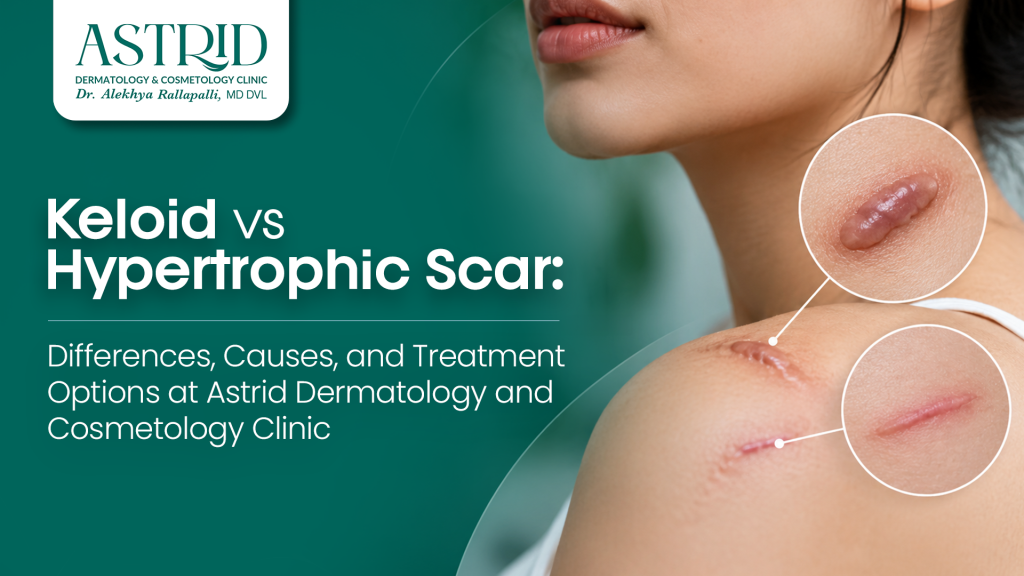
A raised scar can be more than a cosmetic concern. It may itch, feel painful, become thicker over time, or make us uncomfortable about the appearance of our skin. Two common types of raised scars are keloid scars and hypertrophic scars. Although they can look similar, they are not the same.
Understanding the difference between keloid and hypertrophic scar helps us recognise what may be happening and when professional treatment may be useful. At Astrid Dermatology and Cosmetology Clinic, we can assess the scar, understand its cause and recommend a treatment approach based on its size, location, symptoms and history.
What You Should Know About Keloid Scars?
A keloid is a raised, firm scar that develops when the skin produces too much collagen while healing. Unlike a normal scar, a keloid can continue growing beyond the boundaries of the original wound.
Keloids may develop after relatively small injuries, including acne, cuts, burns, surgical procedures, injections or ear piercings. Some people are more likely to develop them because of their individual healing response and family history.
A keloid may appear smooth, firm or shiny and can sometimes cause itching, tenderness or discomfort. It may also continue to enlarge slowly after the original wound has healed.
How Hypertrophic Scars Develop?
A hypertrophic scar is also raised because of excess collagen production during healing. However, there is an important distinction: a hypertrophic scar generally stays within the area of the original injury.
These scars can become thick, red or firm and may feel itchy or tight. They are commonly associated with injuries, burns and surgical wounds.
Unlike many keloids, hypertrophic scars may gradually become flatter and less noticeable over time. However, larger or persistent scars may still benefit from professional scar treatment.
Keloid vs Hypertrophic Scar: What Is the Difference?
The most useful way to understand the Keloid vs Hypertrophic Scar difference is to look at how each scar behaves.
| Feature | Keloid Scar | Hypertrophic Scar |
| Growth pattern | Can extend beyond the original wound | Usually remains within the original wound |
| Appearance | Raised, firm and sometimes shiny | Raised, thick and often red or firm |
| Symptoms | May itch, hurt or feel tender | May itch, feel tight or cause discomfort |
| Natural improvement | Less likely to flatten without treatment | May gradually become flatter |
| Common triggers | Surgery, acne, burns, cuts, piercings and injections | Surgery, burns and injuries |
| Recurrence | Can return after treatment | Generally less likely to recur |
| Treatment | May require one or a combination of treatments | Treatment depends on size, symptoms and appearance |
Because both types can look similar, we should not try to diagnose a raised scar only from photographs or online information. A dermatologist can examine the scar and determine the most appropriate approach.
What Causes Keloids and Hypertrophic Scars?
Both scars develop because the body’s wound-healing process produces excess collagen. However, several factors can influence how a scar develops.
Common factors include:
- Skin injury or surgery
- Burns
- Acne and inflammation
- Ear or body piercings
- Repeated irritation or trauma
- Family tendency to develop raised scars
- Location and depth of the injury
- Individual differences in wound healing
For Indian patients, scars may also be a concern after common procedures such as surgeries, piercings or treatment of acne and other skin conditions. This does not mean everyone with an injury will develop a keloid or hypertrophic scar.
How Are Keloids and Hypertrophic Scars Diagnosed?
A dermatologist usually begins with a physical examination and medical history. We may look at the size, colour, thickness and shape of the scar and ask when it first appeared.
We may also ask:
- What caused the original wound?
- How long has the scar been present?
- Has it continued to grow?
- Does it itch or hurt?
- Have you received any previous scar treatment?
- Have you or your family members developed similar scars?
One important clue is whether the scar extends beyond the original wound. A scar that grows outside the original injury may suggest a keloid, while a raised scar that stays within the wound is more consistent with a hypertrophic scar.
Effective Ways to Manage Keloid Scars
There is no single best treatment for keloids for every patient. Treatment depends on factors such as scar size, location, thickness, symptoms and previous treatment.
Corticosteroid Injections
Corticosteroid injections may help reduce the thickness, firmness and inflammation associated with some keloids. More than one treatment session may be needed, depending on the response.
Silicone Gel and Silicone Sheets
Silicone-based products can be useful as part of scar management. Consistent use is important, and a dermatologist can advise whether they are appropriate for a particular scar.
Laser Treatment
Certain laser treatments may help improve redness, texture or the appearance of selected scars. Laser treatment is not suitable for every scar, so professional assessment is important before proceeding.
Cryotherapy
Cryotherapy uses controlled freezing to treat selected raised scars. It may be considered for certain smaller keloids or as part of a broader treatment plan.
Surgical Removal
In some cases, surgical removal may be considered. However, removing a keloid alone does not guarantee that it will not return. For this reason, additional treatment may sometimes be recommended after or alongside surgery.
Effective Ways to Manage Hypertrophic Scars
The approach to hypertrophic scar treatment depends on the scar’s appearance, symptoms and age.
Possible options may include:
- Silicone gel or silicone sheets
- Corticosteroid injections
- Laser-based treatments
- Pressure therapy in selected cases
- Observation when the scar is likely to improve naturally
- Other dermatologist-recommended scar reduction treatments
Smaller hypertrophic scars may become flatter over time, but persistent or troublesome scars can be evaluated for treatment.
Can Keloids and Hypertrophic Scars Go Away Naturally?
This is one of the most common questions we hear about raised scars.
Hypertrophic scars may gradually become flatter and less noticeable as the skin continues to heal. Keloids, however, are less likely to disappear on their own and may continue to grow.
This does not mean every keloid needs an aggressive procedure. The right approach depends on the individual scar. Our goal should be realistic improvement, such as reducing thickness, controlling symptoms and improving the overall appearance.
Signs Your Scar Needs Professional Attention
We should consider professional evaluation if a scar:
- Continues to grow after the wound has healed
- Extends beyond the original injury
- Becomes increasingly thick
- Causes persistent itching or pain
- Feels tight or uncomfortable
- Affects movement
- Causes significant cosmetic concern
- Returns after previous treatment
Early evaluation can help us understand whether the scar is a keloid, hypertrophic scar or another type of skin change.
Keloid Treatment at Astrid Dermatology and Cosmetology Clinic
At Astrid Dermatology and Cosmetology Clinic, we focus on understanding the individual scar before recommending treatment. The same procedure may not be appropriate for every patient.
During an evaluation, we can consider the scar’s size, location, duration, symptoms and previous treatments. Based on these factors, a dermatologist can discuss suitable keloid treatment, hypertrophic scar treatment or other scar reduction treatment options.
We also believe in setting realistic expectations. Scar treatment may improve thickness, colour, texture or symptoms, but results can vary from person to person. Some raised scars may require more than one treatment or ongoing monitoring.
For patients looking for keloid scar treatment or professional guidance for a persistent raised scar, a personalised dermatological assessment is a useful first step.
How Can We Prevent Raised Scars?
Not every keloid or hypertrophic scar can be prevented, particularly when there is a strong individual or family tendency. However, proper wound care and avoiding unnecessary irritation can support healthy healing.
After an injury or procedure, we should follow the wound-care instructions provided by our healthcare professional. We should also avoid picking at healing skin or repeatedly irritating the area.
If we have previously developed keloids, we should inform our doctor before undergoing elective procedures or piercings. Early professional advice may help with scar-management planning.
Frequently Asked Questions
1. What is the main difference between a keloid and a hypertrophic scar?
A keloid can grow beyond the boundaries of the original wound, while a hypertrophic scar generally stays within the area of the original injury. Both can be raised, firm and sometimes itchy or uncomfortable.
2. Can hypertrophic scars go away on their own?
Some hypertrophic scars may gradually become flatter and less noticeable over time. However, persistent, thick or symptomatic scars can be evaluated by a dermatologist to determine whether treatment may help.
3. What is the best treatment for a keloid scar?
There is no single best treatment for every keloid. Depending on the scar, treatment may include corticosteroid injections, silicone therapy, laser treatment, cryotherapy, surgery or a combination of approaches.
4. Can a keloid come back after treatment?
Yes. Keloids can recur after treatment, particularly after surgical removal alone. A dermatologist may recommend additional treatment or follow-up to help manage the risk of recurrence.
5. When should we see a dermatologist for a raised scar?
We should consider seeing a dermatologist if a scar continues to grow, extends beyond the original wound, becomes painful or itchy, affects movement, or causes significant cosmetic concern. Professional evaluation can help identify the scar type and suitable treatment options.
Moving Forward With the Right Scar Treatment
Understanding the Keloid vs Hypertrophic Scar difference can help us make better decisions about our skin. Both are raised scars caused by an increased collagen response during healing, but keloids can grow beyond the original wound while hypertrophic scars generally remain within it.
Neither type of scar should be treated based only on online photographs or home remedies. A dermatologist can assess the scar and explain whether observation, silicone therapy, injections, laser treatment, cryotherapy, surgery or a combination approach may be appropriate.
If you are concerned about a raised, growing, itchy or painful scar, consider consulting the dermatology team at Astrid Dermatology and Cosmetology Clinic for a personalised evaluation and treatment plan.
Book an appointment today: +91 8495898989
Visit our website: https://dralekhyadermatologist.com/